
 Russian
  English (United States)
  Spanish
  French
  Turkish
  Japanese
  Ukrainian
  Korean
  German
  Dutch
Dutch  Hungarian
  Polish
  Italian
  Indonesian
  Portuguese
  Arabic
  English (UK)
Search “face recognition CCTV supplier” and the first page is almost entirely marketplace listings — Alibaba, Made-in-China, ensun directories with dozens of near-identical product cards and no way to tell which supplier actually manufactures what they’re selling. That’s a directory, not a sourcing guide. This is the guide: a straight checklist for evaluating a face recognition camera supplier before you commit budget, plus the real pricing tiers, MOQ, and OEM terms buyers actually ask us for — using LS VISION’s own LS-FRC-B0501 face recognition camera as the worked example throughout.
Key Takeaways
- Verify specs against a real datasheet before you compare price — resolution, recognition distance, and database capacity vary enough between suppliers to make headline prices meaningless on their own.
- Price breaks by order size are standard: expect a noticeably lower unit price above roughly 300 pieces than below 100, and treat any supplier who won’t quote tiered pricing as a red flag.
- A genuine manufacturer will discuss OEM/ODM (custom branding, firmware, packaging) directly; a trading company will forward your question to someone else and add a markup on the way back.
- Warranty terms worth confirming in writing: length of coverage, what “full” maintenance actually covers, and who handles a failed unit — shipped back to China, or serviced regionally.
- The single fastest way to get an accurate quote is to send quantity, target country, and OEM requirements in your first message — this alone cuts most sourcing back-and-forth in half.
Step 1: Verify the Specs Actually Match What’s Advertised
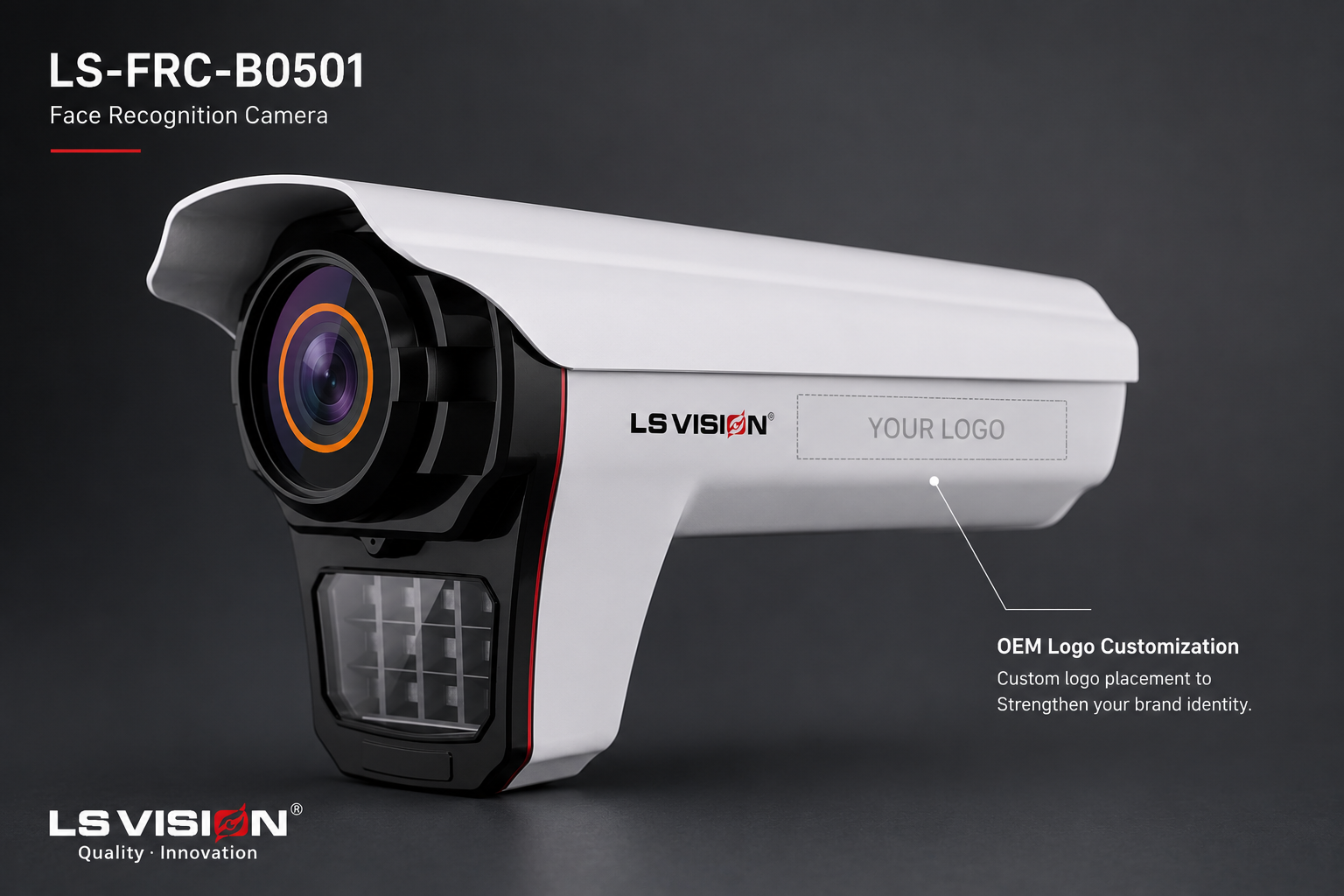
Before comparing a single price, confirm the datasheet is real and specific — not a stock description copied across ten listings. On the LS-FRC-B0501, that means checking: 1/2.7″ CMOS, 5MP (2880×1624) sensor at 25fps; a 3–5m recognition distance on the standard 6mm lens; detection and tracking of up to 6 faces per frame; H.264/H.265 encoding with ONVIF support; infrared night vision to 20m; and IP66 weatherproofing. If a supplier can’t produce these numbers on request, or the numbers shift between the listing and the quote, that’s the first red flag — not the price.
This matters more than it looks like it should, because two cameras that look identical in photos can perform very differently in the field. Our guide on how a face recognition camera actually works explains why recognition distance, minimum face size, and sensor resolution interact — worth a read before you sign off on a spec sheet you don’t fully understand.

Step 2: Ask About Certifications — and Get Them in Writing
For B2B and government-adjacent buyers, certifications aren’t paperwork, they’re a purchase requirement. At minimum, ask for: CE and FCC (electrical/EMC compliance for your target market), RoHS (hazardous substance restrictions), and IP66 test documentation specific to the model you’re buying, not a generic company certificate. A supplier that emails you a PDF within a day usually has these on file as standard practice; a supplier that goes quiet or “will check with the factory” for a week usually doesn’t.
Step 3: Understand MOQ and Price Tiers Before You Ask “What’s Your Best Price”
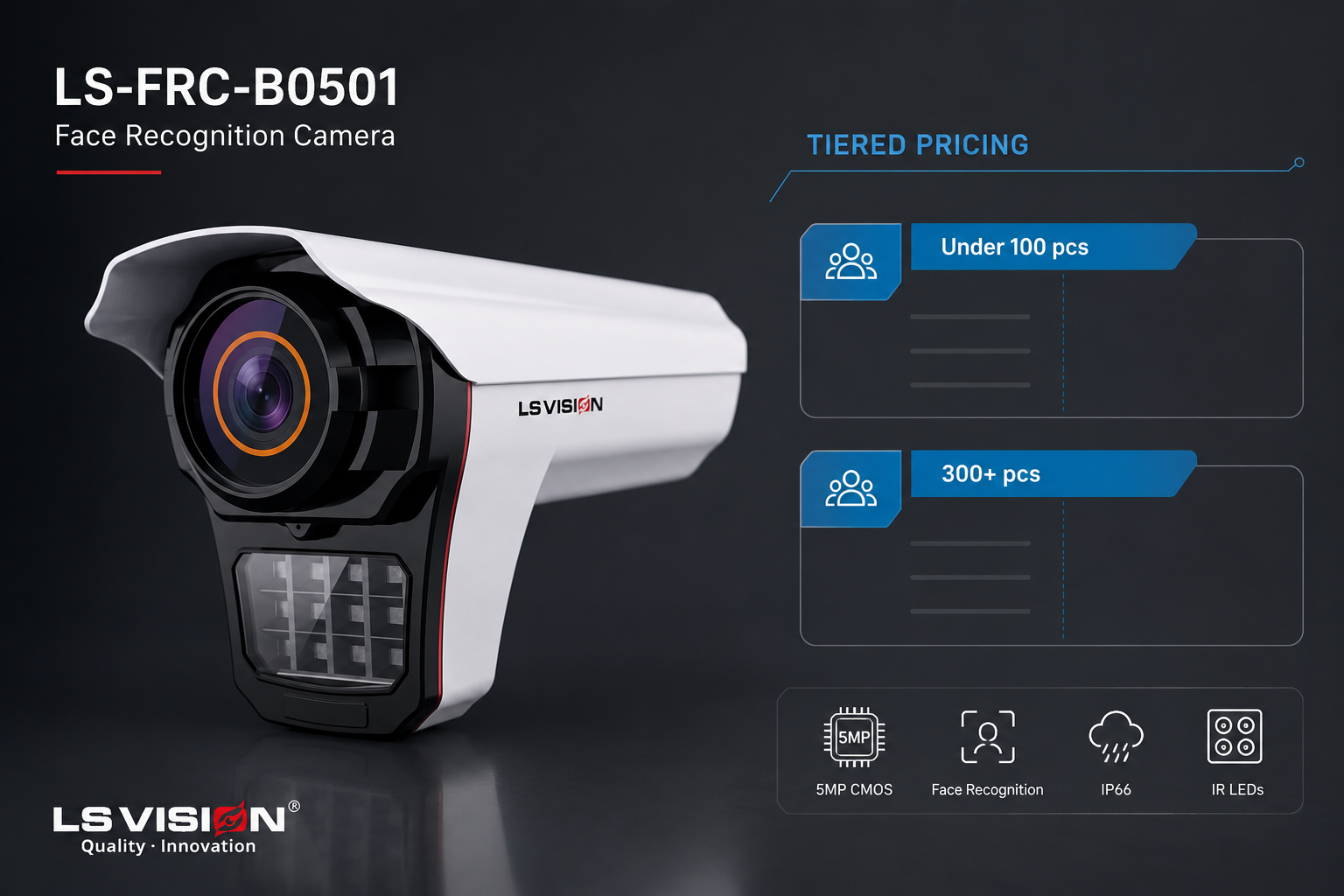
Every serious manufacturer prices in tiers by order volume, and asking for “your best price” without stating a quantity just gets you a vague answer. Real, tiered pricing looks like this:
| Order Volume | LS-FRC-B0501 EX-Work Price (USD) |
| Under 100 pieces | $74.90 |
| 300 pieces and above | $68.80 |
That’s roughly an 8% reduction at the higher tier — a realistic, honest number, not the exaggerated “50% off at scale” some listings imply to get you on a call. Two things to confirm alongside the number itself: how long the quoted price is valid (30–90 days is standard; LS VISION quotes carry a 15-day validity window, so a quote you’re sitting on may need refreshing) and whether the price is EX-Work (you arrange freight) or includes shipping — this single distinction changes landed cost more than most of the negotiation that happens around it.
Know roughly what quantity you need? Send it along with your target country and we’ll return current tiered pricing the same day — that one detail is what turns a generic price list into a real quote.
Step 4: Confirm OEM/ODM Terms if You Plan to Brand the Product
If you’re a distributor, integrator, or reseller, OEM/ODM capability decides whether this supplier fits your business model at all. Ask specifically: can the housing carry your logo and packaging (OEM), and can firmware — app name, cloud branding, default settings — be customized as well (ODM)? Also ask the minimum order quantity for OEM runs specifically, since it is often higher than the standard product MOQ, and the lead time impact, since custom tooling or firmware branching typically adds to production time versus an off-the-shelf order.
A genuine manufacturer answers this in one message because they own the production line. A trading company has to ask the actual factory and relay the answer — which is often your clearest signal of who you’re really buying from.
Step 5: Read the Warranty Terms Like a Contract, Not a Marketing Line
“1-year warranty” means different things depending on what sits behind it. On the LS-FRC-B0501, LS VISION’s terms are one year from the shipping date with whole-life maintenance support — meaning support doesn’t simply end when the warranty year does; it’s a maintenance relationship rather than a hard cutoff. When evaluating any supplier’s warranty, confirm three things directly: what “full” or “whole-life” actually covers after year one (parts only, or labor too), whether a failed unit needs to ship back to the country of manufacture or can be serviced regionally, and what the average turnaround time looks like in practice — not just what’s promised on paper.
Step 6: If You’re an SMB, Ask About Cost-Effective Configurations
Not every buyer needs the highest-spec camera on the line. If your deployment is a single entrance, a small retail counter, or a modest office rather than a large enterprise rollout, ask your supplier directly whether a simpler configuration meets your actual requirement — a shorter recognition distance, a smaller enrolled database, standard rather than OEM packaging — before defaulting to the flagship model. A supplier worth working with will tell you honestly when the cheaper option is genuinely sufficient rather than upselling by default; that honesty is itself a signal of whether they want a repeat customer or a single transaction.
Manufacturer vs. Trading Company vs. Marketplace Listing: What’s the Real Difference?
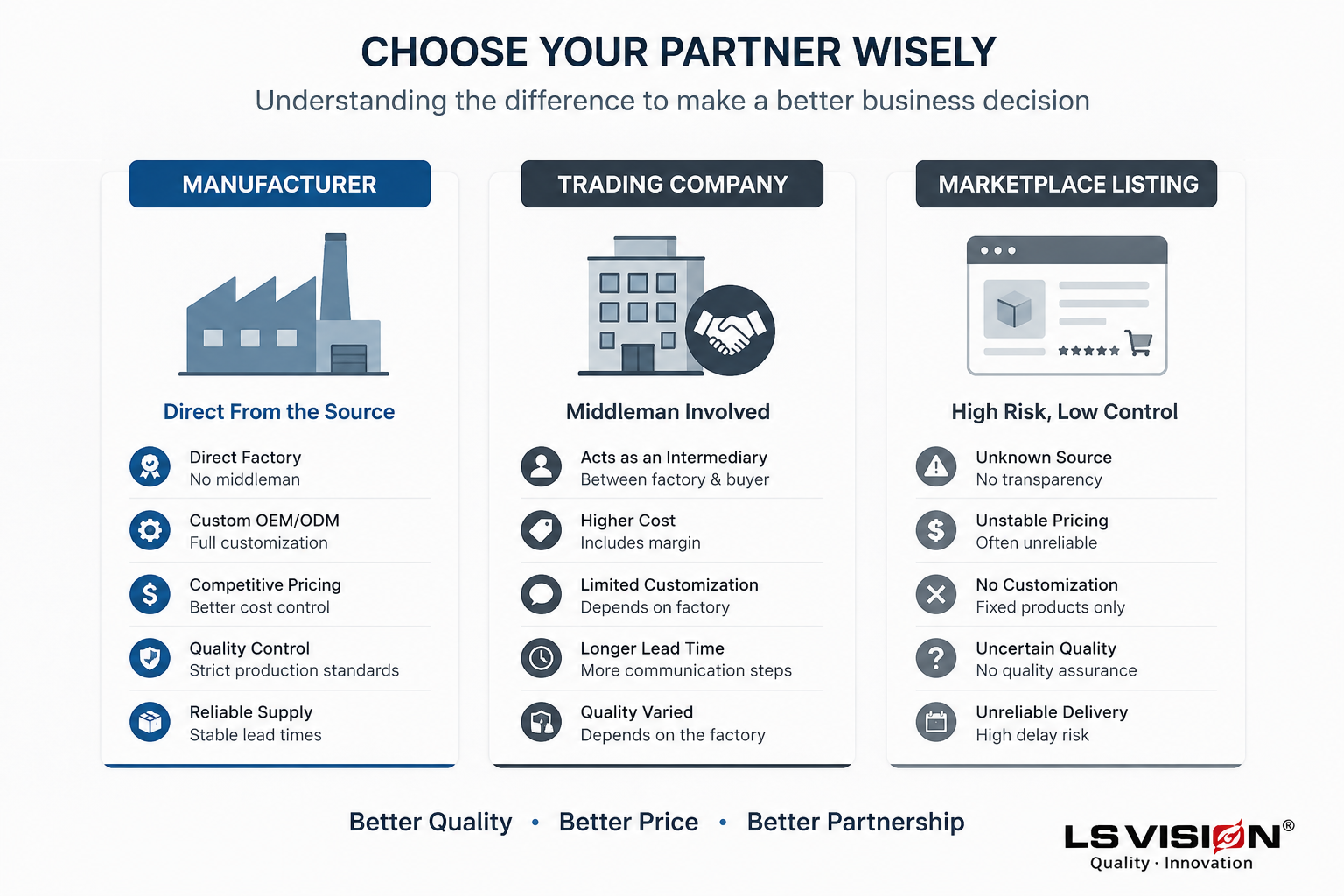
This is the distinction most sourcing guides skip, and it’s the one that actually affects your price, your support, and how fast problems get solved:
| Aspect | Manufacturer (e.g., LS VISION) | Trading Company | Marketplace Listing |
| Spec answers | Direct, from the production line | Relayed from the factory, slower | Often copy-pasted, unverified |
| OEM/ODM | Handled in-house | Forwarded to the factory, added markup | Rarely offered |
| Pricing | Tiered, transparent by volume | Marked up over factory price | Inconsistent, sometimes bait pricing |
| After-sales support | Direct warranty relationship | Middleman adds delay | Minimal to none |
| Best for | Distributors, integrators, repeat B2B buyers | One-off, smaller orders with lower price sensitivity | Casual, low-stakes single-unit buyers |
For any order where OEM branding, warranty reliability, or repeat sourcing matter, going direct to the manufacturer removes a layer of markup and a layer of delay at the same time.
How to Get an Accurate Quote in One Message
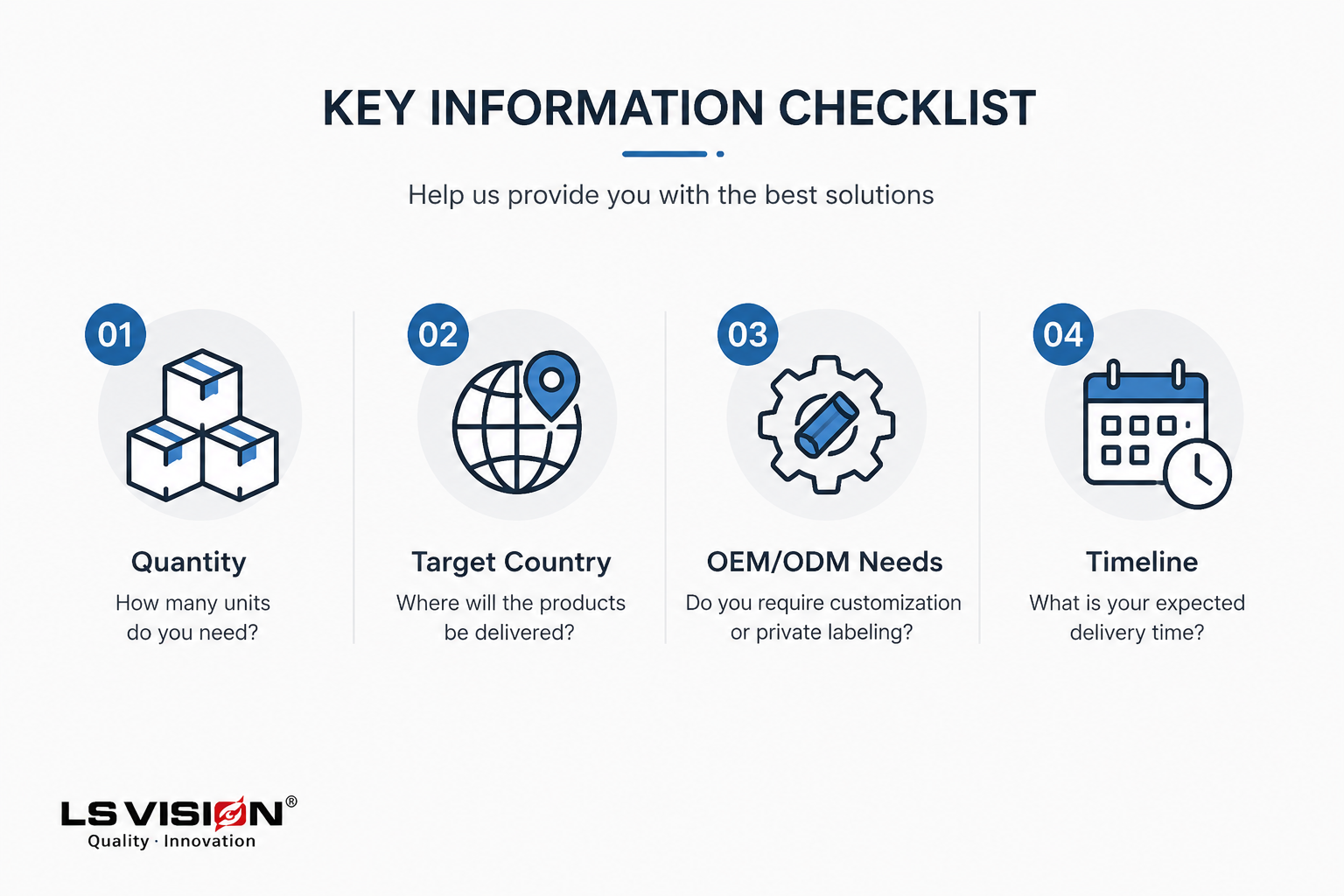
Most sourcing delays aren’t caused by the supplier — they’re caused by an inquiry that doesn’t include enough to quote against. Send these four things in your first message and you’ll typically get a real, tiered quote back the same day instead of a round of clarifying questions:
- Quantity — even a range (50–100, 300+) is enough to place you in the right price tier.
- Target country or region — this affects certification requirements and, for some models, region-specific compliance.
- OEM/ODM needs — state upfront if you need custom branding, packaging, or firmware, rather than raising it after a standard quote is already in hand.
- Timeline — when you need stock landed, so lead time can be confirmed against your order size before you commit.
Related Solutions and Getting a Quote
If you’ve worked through this checklist and the specs fit your deployment, here’s where to go next:
- LS-FRC-B0501 Face Recognition Camera — the product this guide is built around; full spec sheet and quote request on the product page.
- LS VISION face recognition NVR system — for the database and alarm side of a full deployment; see our guide on AI NVR face databases for how capacity is actually sized.
- Explore the full facial recognition security camera range to compare models before you commit to one SKU.
Ready to move from research to a real number? Send your quantity, target country, and any OEM/ODM requirements, and LS VISION will return current tiered pricing and lead time directly — no trading-company markup, no marketplace guesswork.
Заключение
Sourcing a face recognition camera supplier is a short list, not a leap of faith: verify the spec sheet is real, get certifications in writing, understand your price tier before you negotiate, confirm OEM terms if you plan to brand the product, and read the warranty like a contract. Do that with a manufacturer directly and you cut out both the markup and the delay that come with buying through a middleman.
FAQs
What is the minimum order quantity for a face recognition camera?
It varies by supplier, but tiered pricing typically starts recognising a meaningful discount around 300 units — on the LS-FRC-B0501, orders under 100 pieces and orders of 300+ pieces sit on two different price tiers. Smaller test orders are usually possible; ask directly rather than assuming a high MOQ applies.
How much does a face recognition CCTV camera cost wholesale?
As a reference point, the LS-FRC-B0501 is priced at $74.90 EX-Work under 100 pieces and $68.80 EX-Work at 300 pieces and above. Actual landed cost depends on freight terms, so confirm whether a quote is EX-Work or shipping-inclusive before comparing suppliers.
Can I get my own branding on a face recognition camera (OEM)?
Yes, with a genuine manufacturer — ask specifically about logo and packaging customization (OEM) versus firmware-level customization such as app branding (ODM), since they’re often quoted with different MOQs and lead times.
What warranty should I expect from a face recognition camera supplier?
A one-year warranty from the shipping date is standard; confirm what happens after that year, since some suppliers, including LS VISION on the LS-FRC-B0501, offer whole-life maintenance support rather than ending the relationship at the 12-month mark.
Is it cheaper to buy from a trading company than a manufacturer?
Not usually, once you account for the markup a trading company adds over the factory price. The main reason to use one is convenience for a very small, one-off order — for repeat B2B purchasing, OEM work, or warranty reliability, going direct to the manufacturer is typically both cheaper and faster to resolve issues with.
What’s the fastest way to get an accurate quote from a supplier?
Include your quantity, target country, OEM/ODM requirements, and timeline in your very first message. Suppliers can only quote tiered pricing accurately against these details, and providing them upfront avoids the usual back-and-forth that stretches sourcing out by days.
