
 Ukrainian
  English (United States)
  Spanish
  French
  Turkish
  Japanese
  Russian
  Korean
  German
  Dutch
Dutch  Hungarian
  Polish
  Italian
  Indonesian
  Portuguese
  Arabic
  English (UK)
You are driving down a highway, and a sign reads “Speed Limit Enforced by Radar.” So what does that actually mean for you? In short: radar is being used to measure the speed of vehicles on that road, and if you speed, you can be caught and ticketed. Sometimes a police officer holds the radar. More and more often, a camera does — automatically.
This guide explains exactly what “radar enforced” means, who does the enforcing, how the technology measures and captures speed, and whether it is legal. If you buy or operate traffic equipment, you will also see how a modern automated speed enforcement system works, part by part.
Quick Answers
What does “radar enforced” mean? It means radar technology is used to measure vehicle speeds in that area. If you exceed the limit, an officer or an automated camera can record it and issue a ticket.
Does “radar enforced” mean I will get a ticket? Only if you speed. The sign is a legal warning and a deterrent. Drive within the limit and nothing happens.
Who enforces it — police or cameras? Both. A “radar enforced” area may use a police officer with a radar gun, a mobile or fixed speed camera, or a fully automated enforcement system.
Is radar enforcement legal? Yes, where local law allows it. Many regions require clear signage precisely so drivers are warned in advance.
How is “radar enforced” different from a radar speed sign? A radar speed sign only shows your speed to warn you. A radar-enforced system adds a camera to capture violations and support a fine.
What Does “Radar Enforced” Mean?
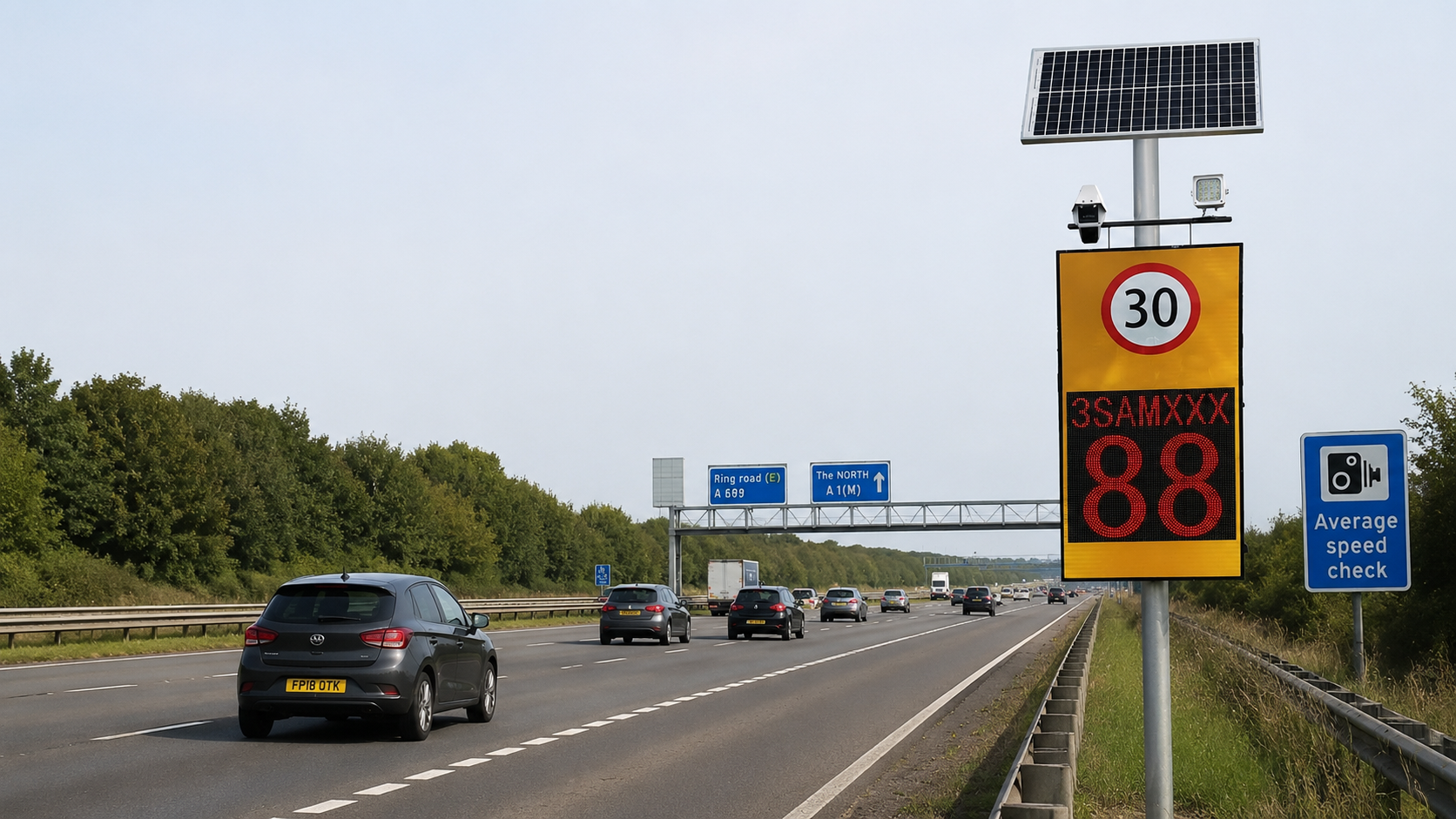
“Radar enforced” is a legal notice. When you see it on a speed-limit sign, it tells you that authorities use radar to monitor speed on that stretch of road, and that speeding there carries a real risk of a ticket.
The word radar stands for Radio Detection and Ranging. It is a technology that sends out radio waves and reads the signal that bounces back, which lets it detect an object’s presence, distance, and speed. Traffic authorities use it to measure how fast your vehicle is moving, in real time.
You will see the same idea written several ways — “radar enforced,” “speed checked by radar,” “speed monitored by radar,” or “speed limit enforced by radar.” They all mean the same thing. Your speed is being measured, and the limit is being enforced.
There is also a practical reason these signs exist. In many places, the law treats hidden speed enforcement as a “speed trap,” and it requires authorities to post signs so drivers get fair warning. So the sign is not just a threat — it is a legal requirement that also works as a deterrent. To be clear, this is different from a plain radar speed sign that only warns drivers without recording anything.
How Radar Measures Your Speed
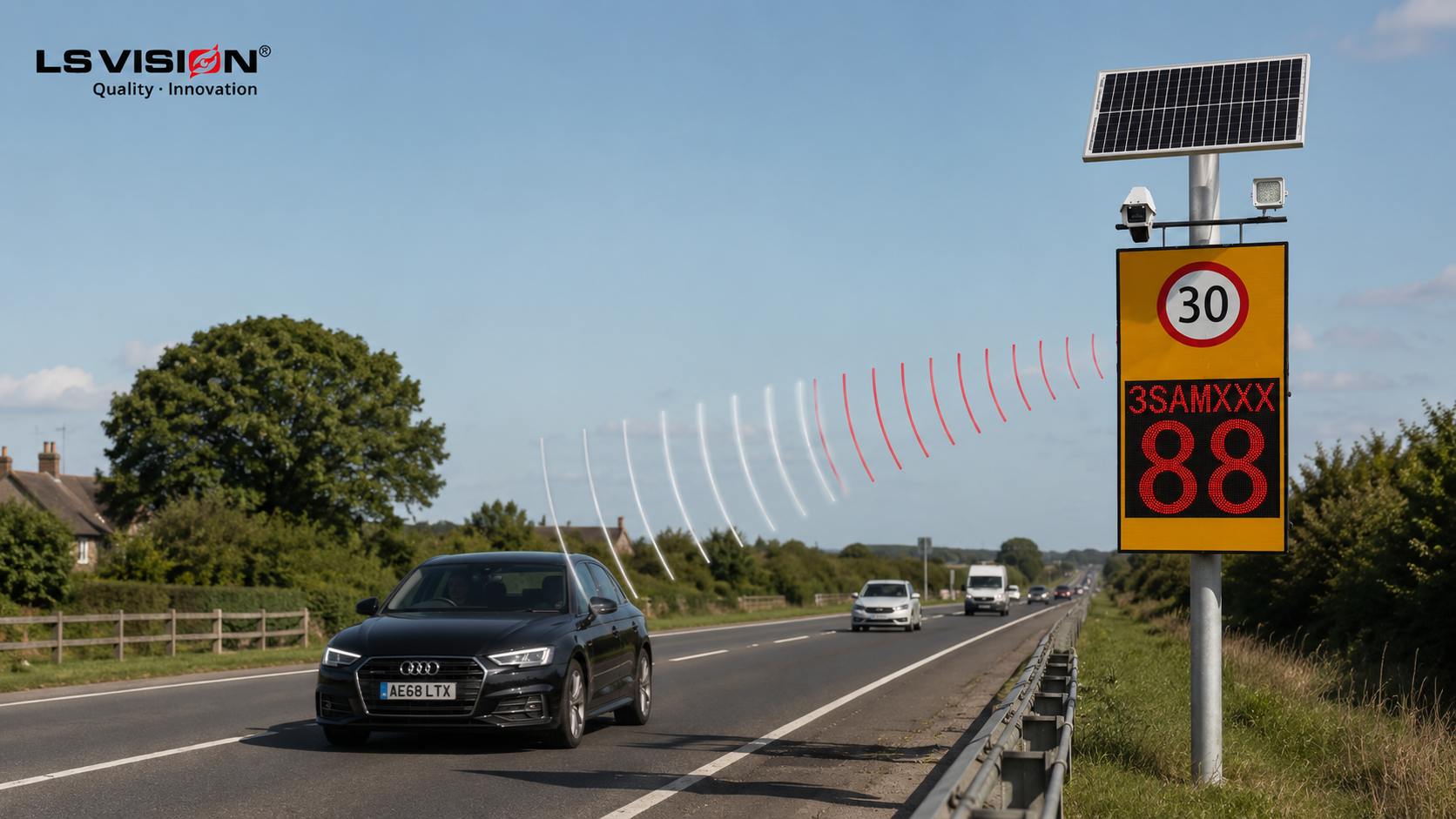
To understand radar enforcement, you need to understand how the radar reads your speed. It relies on the Doppler effect.
Here is the principle. The radar emits radio waves at a fixed frequency. Those waves hit your moving vehicle and reflect back. Because your car is moving, the reflected waves return at a slightly different frequency. The size of that frequency shift tells the radar exactly how fast you are going. The device does this many times a second, so the reading is instant and continuous.
Modern enforcement radar uses a 24 GHz millimetre-wave signal, which stays accurate in everyday traffic and across multiple lanes. Radar has one big advantage over a camera alone: it does not need light. It measures speed at night, in rain, in fog, and in dust. That reliability is why radar sits at the core of nearly every speed enforcement system.
One technical detail matters for accuracy: the angle. Radar reads speed most accurately when it faces the traffic almost head-on. A steep angle can under-read speed slightly — engineers call this the cosine error — so a well-installed system is aligned to keep that error tiny. Good calibration and correct mounting are what make radar evidence hold up.
The Types of Radar Speed Enforcement
“Radar enforced” does not describe just one method. It covers a whole family of enforcement tools. Here is how they compare.
| Enforcement type | How it works | Needs an officer on site? |
| Police radar gun | An officer measures your speed and pulls you over | Так. |
| Mobile speed camera | A radar/LIDAR camera on a vehicle or trailer captures speeders | Sometimes |
| Fixed speed camera | A permanent roadside camera measures and captures 24/7 | No |
| Automated enforcement system | Radar plus a camera and plate recognition capture and log violations automatically | No |
| Aircraft enforcement | An officer times vehicles from a plane or helicopter | Так. |
The clear trend is automation. Officers and radar guns still play a role, but fixed and automated systems now do most of the heavy lifting, because they work every hour of every day with no one on site. That shift is what “automated speed enforcement” refers to.
What Is Automated Speed Enforcement?
Automated speed enforcement (ASE) is the modern face of “radar enforced.” Instead of an officer, a machine does the whole job — it measures the speed, captures the vehicle, reads the plate, and creates a record that can support a ticket.
An ASE system fuses three technologies into one unit:
- Radar measures each vehicle’s speed, in any weather.
- A camera captures a clear image or video of the offending vehicle.
- ANPR (automatic number plate recognition) reads the licence plate from that image.
The result is a complete, objective record: this plate, at this speed, at this time and place. That record is what turns a speeding event into enforceable evidence. If you want the full technical breakdown of the camera side, see our guide to radar speed cameras and video enforcement.
How an Automated Speed Enforcement System Works
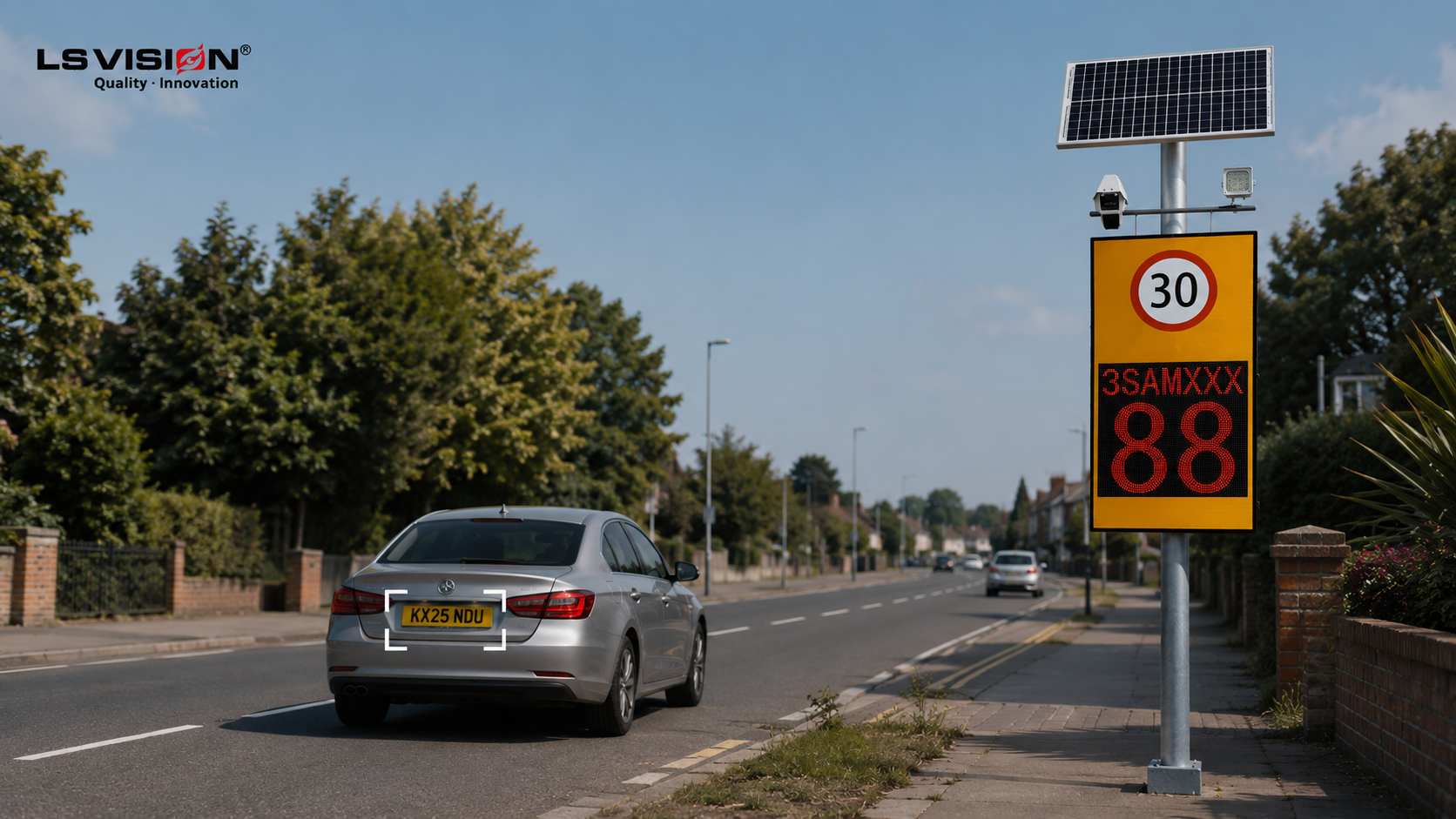
The whole process finishes in a fraction of a second, before the vehicle clears the sensor. Here is the sequence, step by step.
| Step | What the system does |
| Detect | The radar picks up an approaching vehicle and measures its speed. |
| Compare | The system checks that speed against the limit you set for the lane. |
| Trigger | If the vehicle is over the threshold, the radar triggers the camera. |
| Capture | The camera records a high-resolution image, and often a short video, of the vehicle. |
| Read | ANPR reads the licence plate from the image. |
| Package | The system bundles the speed, plate, time, date, and location into one evidence record. |
| Надіслати | It stores the record and pushes it to a management platform for review or action. |
Many systems also show the driver their speed on an LED display at the same moment. That means the system warns and records together — it deters first, and captures the drivers who ignore the warning.
A Closer Look: Section (Average) Speed Enforcement
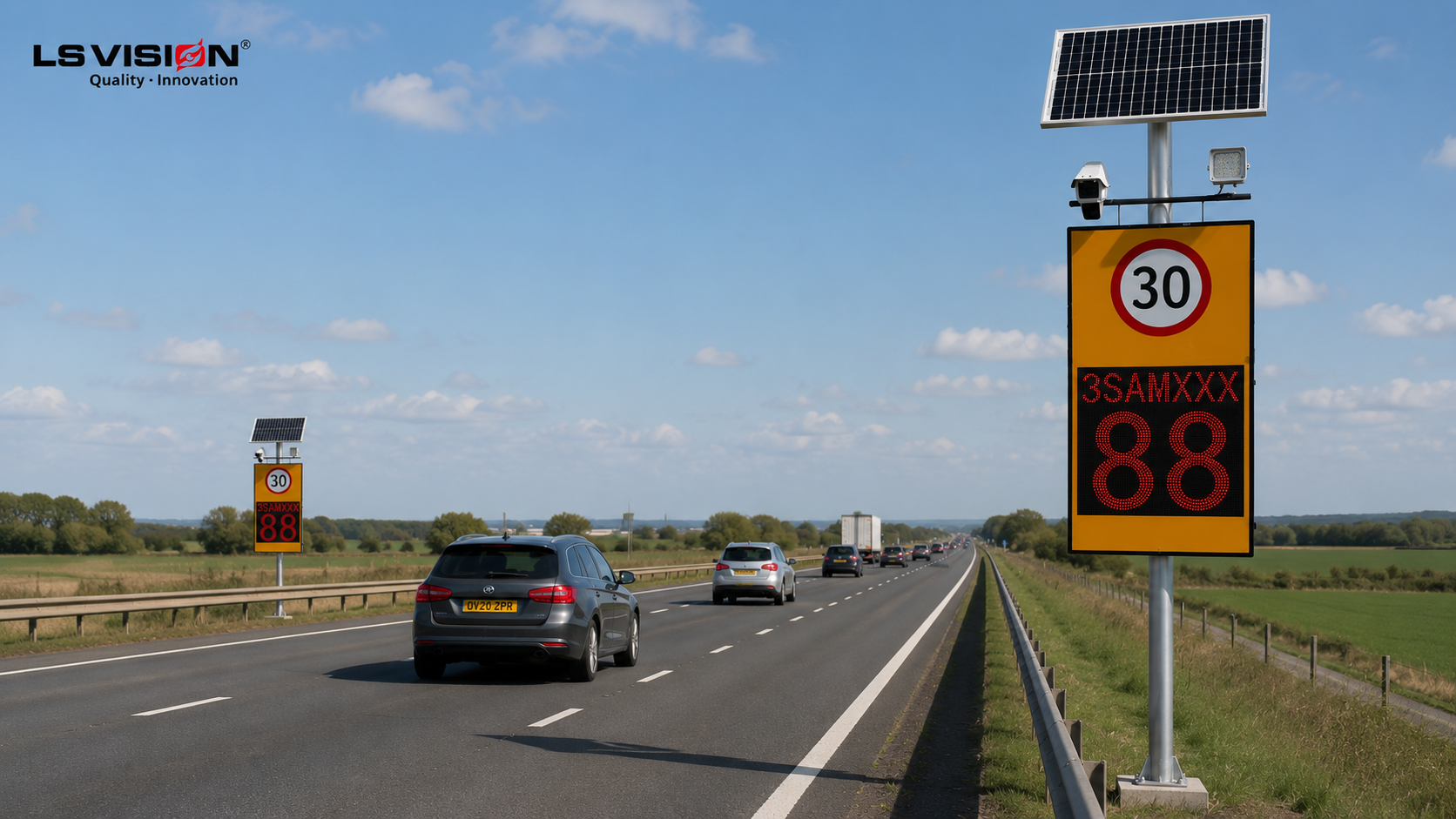
Not all radar enforcement measures speed at a single point. Section enforcement — also called average speed enforcement — measures your speed over a distance between two camera points. It reads your plate at the entry point and again at the exit point, then calculates your average speed for that stretch.
The maths is simple. Suppose two enforcement points sit 2 km apart, and a vehicle covers that distance in 60 seconds. Convert the time to hours (60 ÷ 3,600 = 0.0167 h), then divide distance by time: 2 km ÷ 0.0167 h ≈ 120 km/h. If the limit is 100 km/h, that vehicle is speeding on average, even if it slowed briefly at each camera.
Section enforcement is powerful because you cannot beat it by braking only at the camera. It keeps drivers at a safe speed for the whole zone, which is why it is common in tunnels and on motorways.
Key Components of an Automated Enforcement System
Two systems can look alike and perform nothing alike. When you evaluate one, check every part below. The details decide whether your evidence stands up.
| Component | What it does | What to look for |
| Radar sensor | Measures vehicle speed accurately, in any weather | 24 GHz millimetre-wave radar |
| Speed range | Must cover your road’s real speeds | A wide range, such as 0–199 km/h |
| Detection distance | Sets how early the system reacts | A long monitoring distance, around 120 m |
| ANPR / plate recognition | Turns an image into an identity | Accurate plate reading, day and night |
| Capture camera | Freezes the vehicle as evidence | High resolution, with infrared for night |
| LED display | Warns drivers and adds a deterrent | Shows speed, plate, or a custom message |
| Display size | Larger screens read from farther away | Options such as 640×640 mm and 640×1280 mm |
| Power | Off-grid and fixed sites differ | Solar with battery, or AC mains |
| Management platform | Turns captures into usable data | Data, reports, alerts, and remote access |
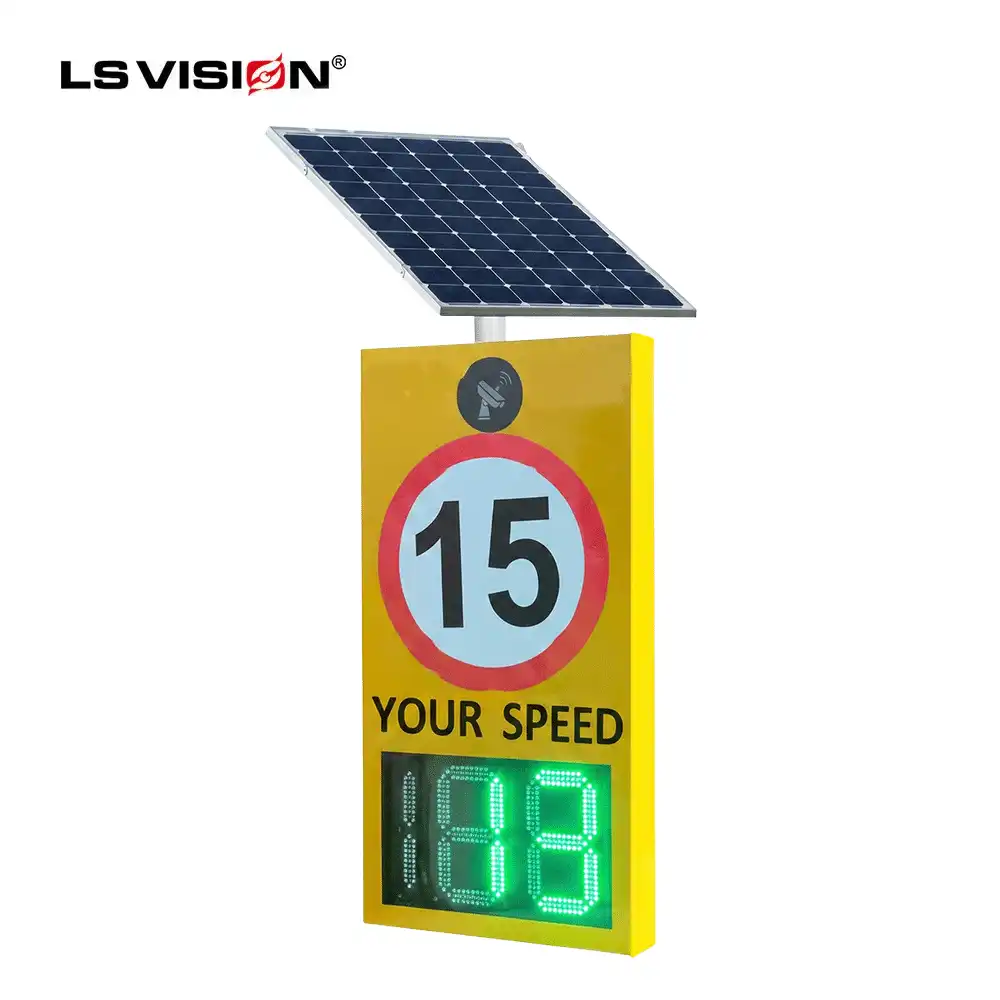
LS-RSM10-SP Automated Traffic Enforcement System with Solar Panel
Connectivity Options
- Available with RJ45 Ethernet or 4G connectivity
- Integrated radar speed detection
- License plate recognition
- LED warning display
- Traffic data platform — all in a single traffic monitoring system
- Urban roads
- School zones
- Residential streets
- Construction areas
- Accident-prone areas
- Factory-direct supply
- Flexible OEM/ODM customization
- Stable delivery
- Long-term technical support
The Evidence: What Makes a Radar Ticket Hold Up
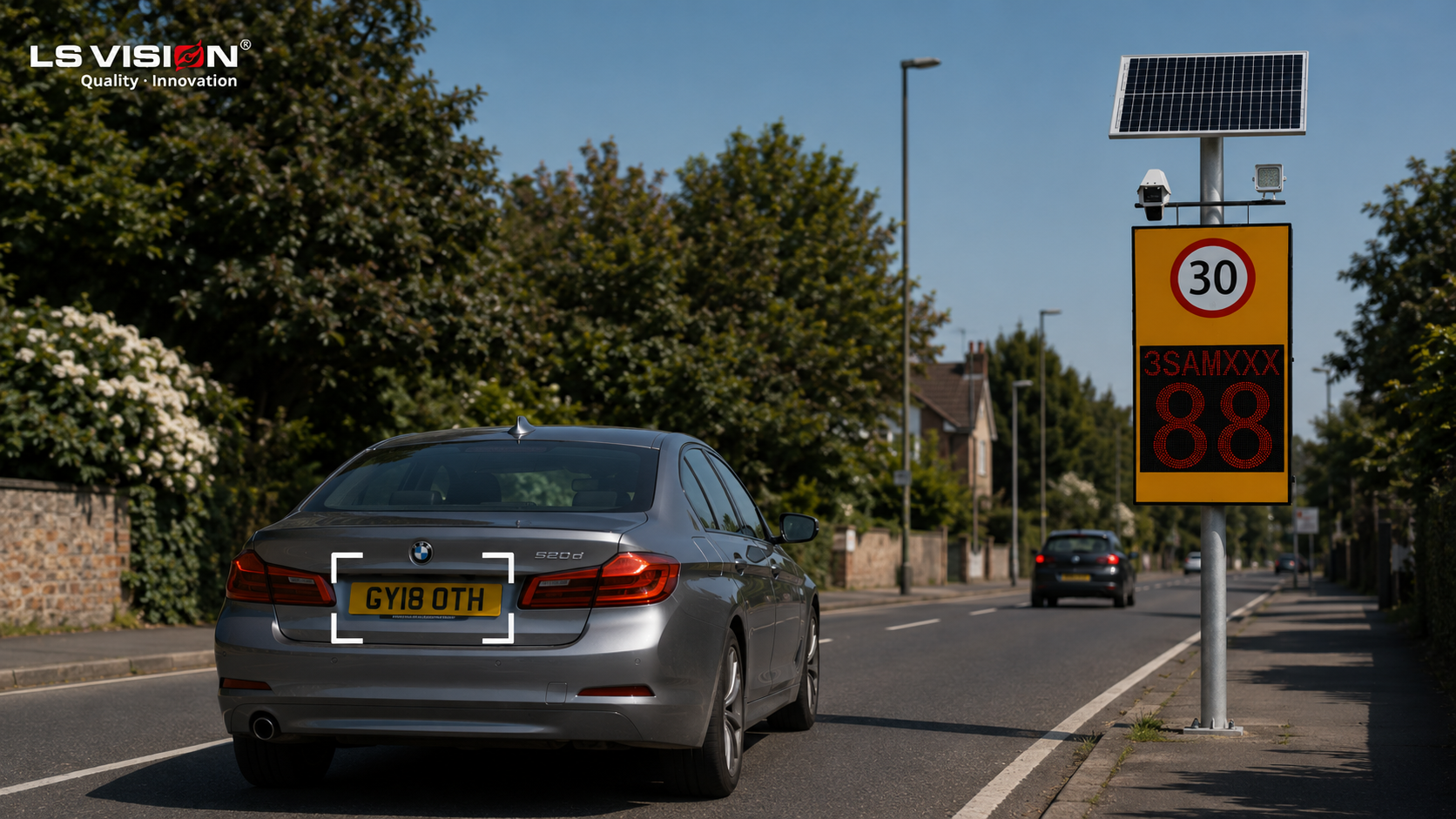
A ticket is only as strong as the evidence behind it. A radar-enforced violation must produce a record that is clear, complete, and objective — otherwise it can be challenged.
A solid evidence package includes the vehicle’s measured speed, a clear image of the vehicle, the licence plate, and the exact time, date, and location. Radar-generated speed data is valued in legal proceedings precisely because it is objective — it is a machine reading, not a human guess. That is also why calibration matters. A properly calibrated, correctly aligned radar produces evidence that holds up, while a poorly installed one invites disputes.
This is the real reason to care about system quality. Cheap hardware that misreads speed or blurs a plate does not just fail once — it undermines every case built on it.
The Management Platform: From Capture to Action
The camera captures a violation. The platform turns thousands of violations into something you can manage. This back-office software is what separates a real enforcement program from a lone camera on a pole.
A strong platform lets you watch passing-vehicle data in real time, sort speeding vehicles from compliant ones, and see every device on a live GIS map. It flags violations instantly, matches plates against a blacklist, measures section speed between points, generates reports, and gives your team remote access from a phone. Great hardware with weak software still leaves you doing manual work, so the platform deserves as much attention as the camera.
Types of Violations a Radar Enforcement System Detects
Speeding is the headline, but a modern system watches for more.
| Violation | How it is caught |
| Overspeed | Radar measures speed; the camera captures anything over the threshold |
| Average-speed breach | Section measurement compares entry and exit times between two points |
| Flagged or blacklisted vehicles | ANPR matches plates against your watch list and alerts you |
| Unregistered access | The system logs every plate entering a monitored zone, with time stamps |
Where Automated Speed Enforcement Is Used
Because it handles both warning and capture, a radar enforcement system fits almost anywhere speed is a safety risk.
| Location | Why it fits |
| Urban roads and expressways | Enforces limits and feeds traffic data to the city |
| National and provincial highways | Covers fast, high-volume roads with all-weather capture |
| School zones | Warns drivers and records violations near children |
| Work zones | Protects crews on high-speed roads |
| Tunnels and bridges | Section enforcement keeps speed safe across the whole span |
| Industrial parks and site entrances | Controls speed and logs every plate for access control |
You can see the full traffic-safety range on the AI video surveillance and traffic solutions page.
Is Radar Enforcement Legal?
It depends on where you are. Radar enforcement by police is legal almost everywhere. Automated speed enforcement — where a camera issues the ticket — is a different matter, and the rules vary widely by country, state, and city.
In the United States, automated speed enforcement is authorised in a number of states and the District of Columbia, and it is growing. Where it is used, the law usually requires clear “radar enforced” or “photo enforced” signage so drivers get fair warning. Outside the US, many countries run large automated networks on motorways and in cities.
For an operator, the takeaway is practical. Confirm the rules in your jurisdiction, post the required signs, and keep your system calibrated so every ticket is backed by clean evidence.
Radar Enforcement vs. Radar Speed Signs: Know the Difference
These two get confused constantly, so make the distinction early. Both use radar. They do opposite jobs.
| Factors | Radar speed sign (warning) | Radar enforcement system |
| Main job | Show speed, calm traffic | Capture violations, support fines |
| Camera and plate capture | No | Так. |
| Issues tickets | No | Так. |
| Evidence record | No — anonymous data only | Yes — speed, plate, time, location |
| Best for | Schools, communities, quiet roads | Highways, cities, access control |
If your goal is simply to slow drivers down, a warning sign is enough — and we cover whether those signs can ticket you in do radar speed signs give tickets?. If you need to capture and enforce, you need a full automated traffic enforcement system.
What Separates a Reliable Enforcement System
Enforcement is unforgiving. A system that misses a plate at night, misreads speed at an angle, or fails in the rain does not just lose one ticket — it weakens your entire program. The systems that earn trust get the fundamentals right.
They use accurate 24 GHz radar with correct alignment to keep the cosine error tiny. They pair it with high-resolution, infrared-equipped capture so plates stay readable after dark. They package complete, objective evidence for every event. They run in any weather. And they come with a management platform and proper support, so the data actually reaches the people who act on it. When you weigh systems, judge them on these fundamentals — not on price alone.
How to Choose an Automated Speed Enforcement System
Keep six things in mind, and you will choose well the first time.
- Accuracy. Confirm a 24 GHz radar and correct alignment for reliable speed readings.
- Capture quality. Insist on high-resolution ANPR that reads plates day and night.
- Speed and lanes. Make sure the system covers your road’s speeds and lane count.
- Power. Choose solar with battery for remote sites, or AC for permanent installs.
- Platform. Check that the software gives you data, reports, alerts, and remote access.
- Support and customisation. Ask about OEM/ODM, calibration, warranty, and after-sales help.
Get a Radar Enforcement System Built for Your Road
If you plan a speed enforcement project, or you resell traffic systems to your own clients, the system you choose has to produce clean evidence, every time. LS VISION manufactures automated traffic enforcement systems that combine a 24 GHz radar, licence-plate recognition, an LED warning display, and a full management platform — with solar or AC power and complete OEM/ODM customisation.
Tell us your road type, speeds, lanes, and whether you need section enforcement, and we will recommend the right system and send you a quote.
Висновок
So, what does “radar enforced” mean? It means radar is measuring speed on that road, and speeding there can earn you a ticket — from an officer, or increasingly from an automated camera system. Modern automated speed enforcement fuses radar, a camera, and plate recognition to capture violations and build objective evidence, all backed by a platform that turns captures into action.
If you operate on the enforcement side, remember what makes it work: accurate radar, clean night capture, complete evidence, all-weather reliability, and strong software. Get those right, and every “radar enforced” sign on your road stands behind a system that delivers.
FAQ’s
Q: What does “radar enforced” mean on a speed limit sign?
A: It means authorities use radar to measure vehicle speeds on that road. If you exceed the limit, an officer or an automated camera can record it and issue a ticket.
Q: Does “radar enforced” mean there is a speed camera?
A: Sometimes. A radar-enforced area may use a police officer with a radar gun, a mobile or fixed speed camera, or a fully automated enforcement system. The sign warns you that your speed is being checked.
Q: What is the difference between “radar enforced” and “photo enforced”?
A: “Radar enforced” means radar measures your speed. “Photo enforced” means a camera captures an image as evidence. Automated systems usually do both — radar measures, and the camera captures.
Q: How does radar measure a car’s speed?
A: Radar sends out radio waves that reflect off your moving vehicle. The reflected waves come back at a shifted frequency, and the size of that Doppler shift tells the radar exactly how fast you are going.
Q: Is automated speed enforcement legal?
A: It depends on your location. Police radar is legal almost everywhere; camera-issued tickets are authorised in many but not all regions, and the law usually requires clear warning signs where they are used.
Q: What is average or section speed enforcement?
A: It measures your average speed over a distance between two camera points, using your plate at entry and exit. You cannot beat it by braking only at the camera, because it averages your speed for the whole zone.
Q: What evidence does a radar enforcement system produce?
A: A complete record for each violation: the measured speed, a clear image of the vehicle, the licence plate, and the exact time, date, and location — the objective package needed to support a ticket.
Q: Does radar work at night and in bad weather?
A: Yes. Radar measures speed in any light and cuts through rain, fog, and dust. Infrared capture keeps licence plates readable after dark.
Q: Can one system enforce speed across multiple lanes?
A: Many systems cover several lanes and track multiple vehicles at once. Confirm the lane coverage of the specific model against the road you plan to monitor.
Q: Can a radar enforcement system also warn drivers?
A: Yes. Models with an LED display show drivers their speed as they approach, so the system deters speeding and records violations at the same time.
